January 19, 2022
Marine Floating Wetlands
Project Background
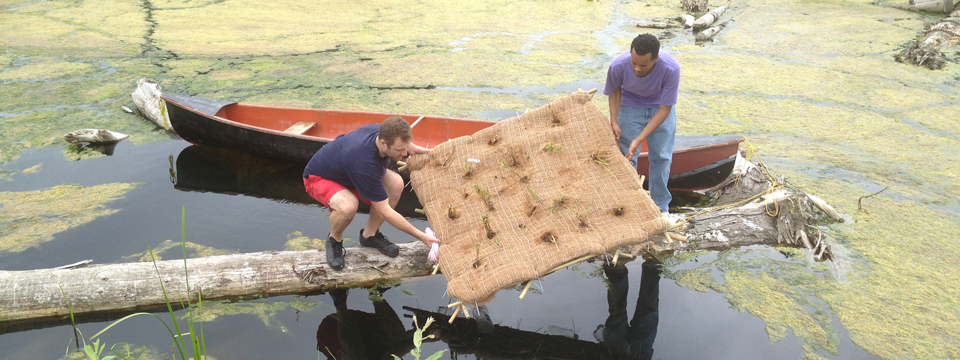
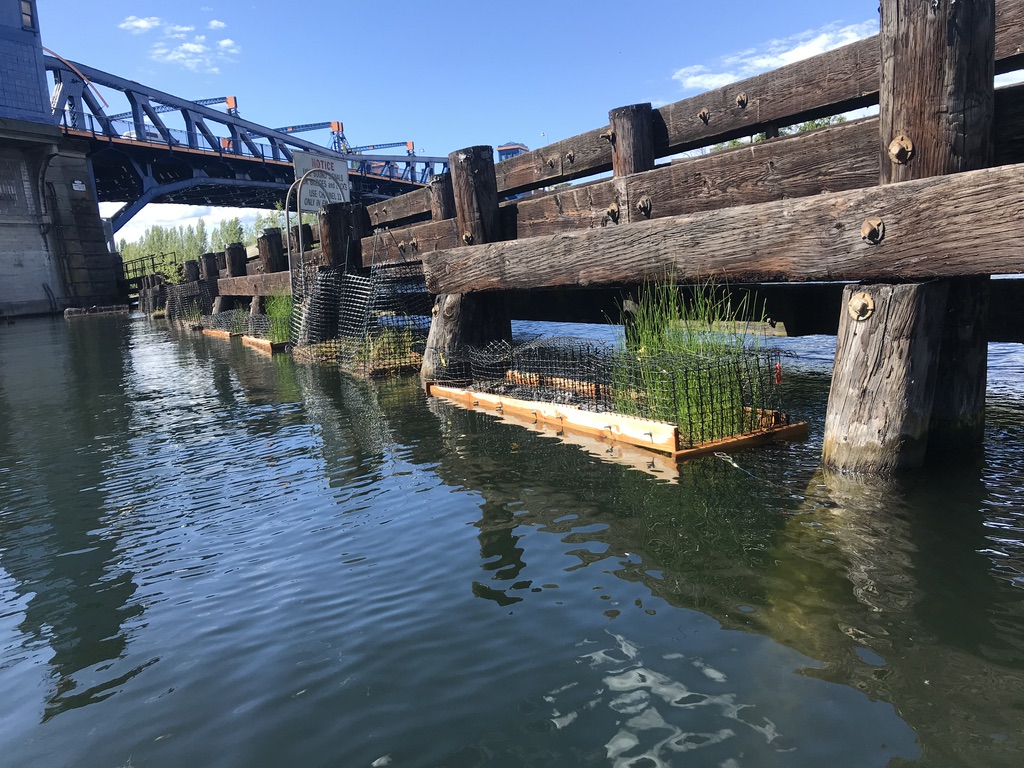
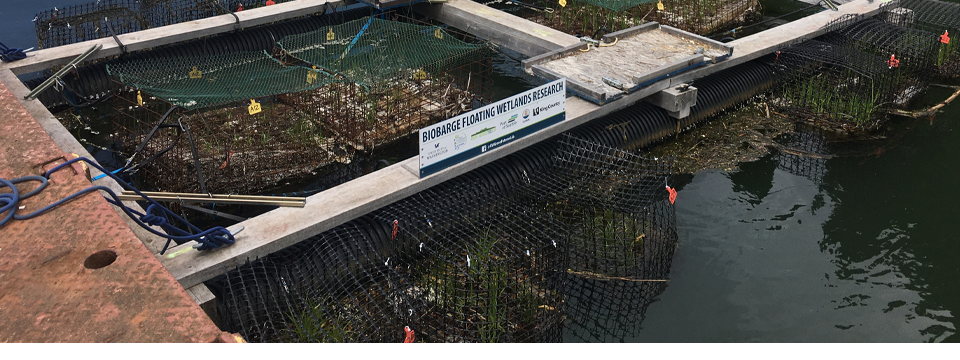
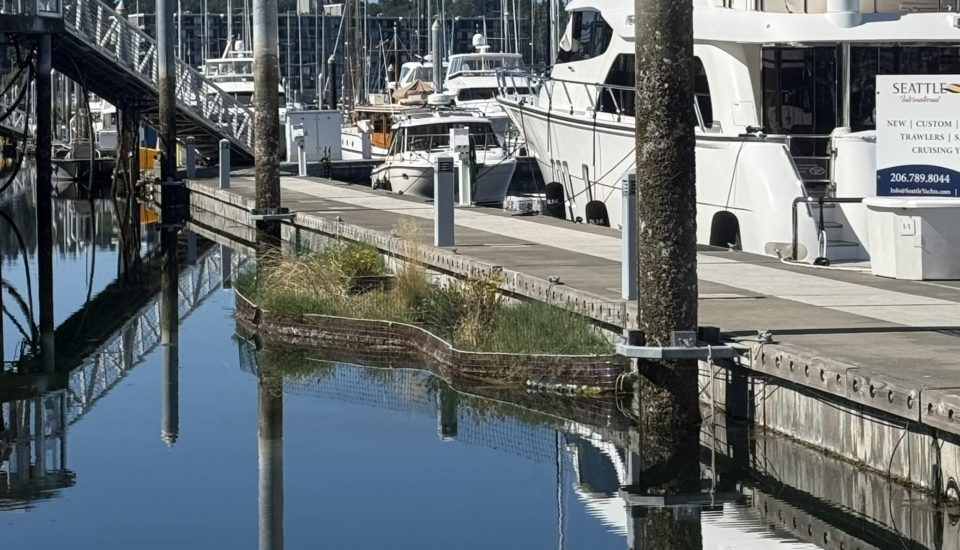
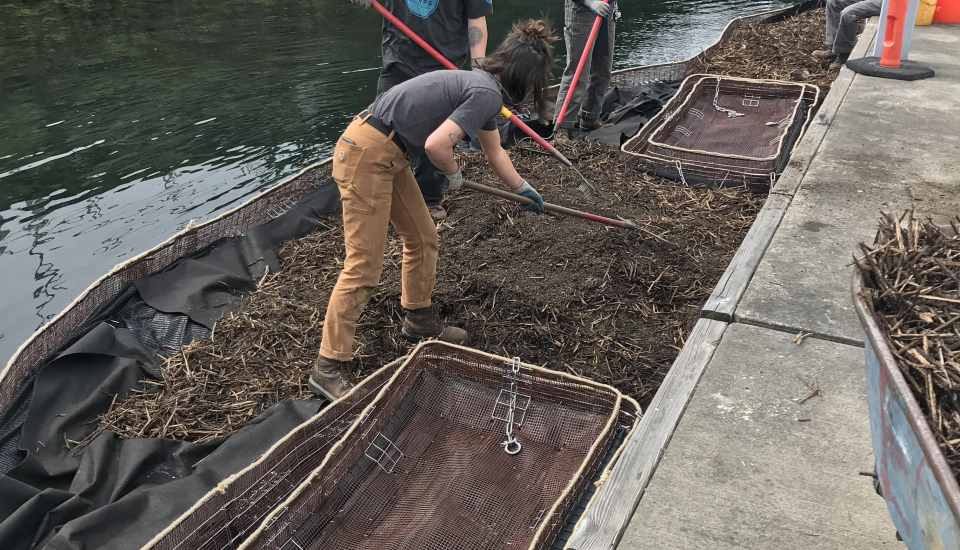
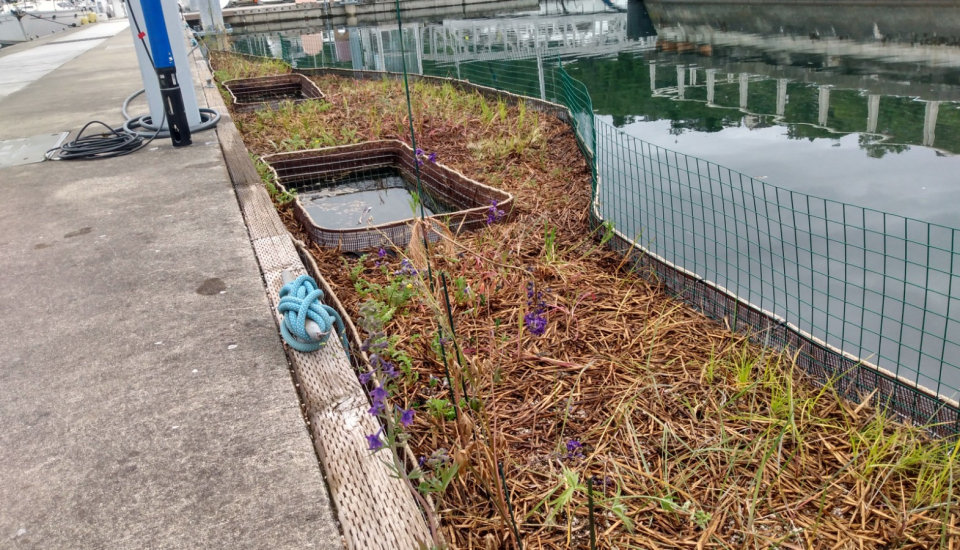
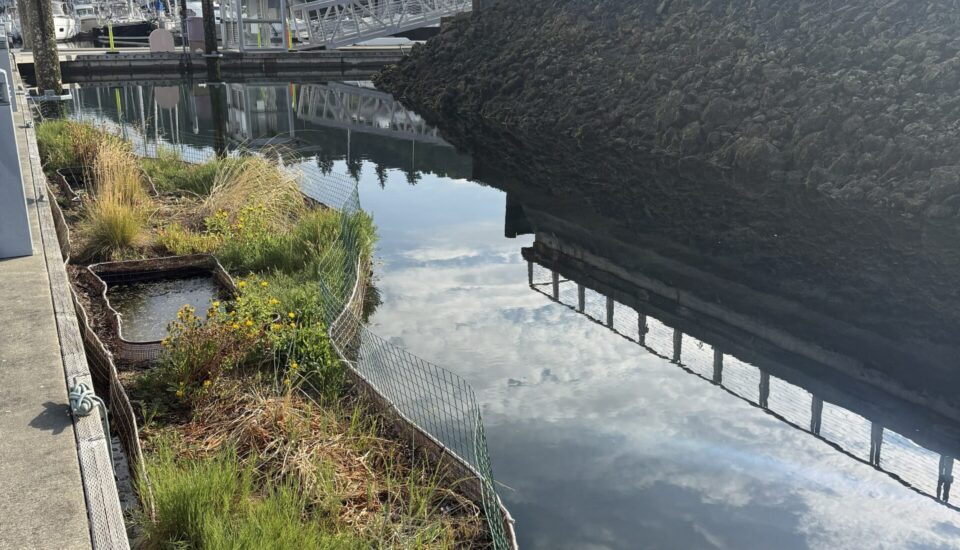
To test the viability of floating wetlands in marine waters, the GFL and EarthCorps have installed customized BioMatrix eco-islands along a dock at Shilshole Bay Marina. The living shoreline units are again aimed at providing missing habitat for fish and to begin to restore wetland functions along urbanized shorelines where traditional restoration is not possible. We filled the Biomatrix units with our custom-designed substrate mix – half which contains biochar – and planted them with a carefully selected plant palette based on observations of Puget Sound shorelines. Two of the ten connected units are submerged and planted with eelgrass to provide fish refuge. The floating wetlands are located between the dock and the steep rip-rapped shoreline next to a stormwater outfall, with visibility from the marina walkway above. We are monitoring them for fish use and behavior, plant survival and health, and potential water quality benefits.
Research Findings
Our current findings suggest that while the floating wetlands are supporting fish populations, their effectiveness for juvenile salmon may improve as the system matures and develops a more established vegetative and ecological structure. The most common fish species seen under the wetland unit is stickleback, with juvenile salmon seen in varying numbers each year. Continued monitoring will be necessary to assess long-term impacts on salmon presence and habitat use. Our preliminary results for vegetation monitoring have found that certain plant species, such as Salicorna pacifica, Jaumea carnosa, Distichlis spicata and Potentilla anserina have shown strong growth under the floating wetland conditions, and would be suitable for future marine floating wetland units in the Puget Sound.
In addition to the floating wetland unit, four shelter shells have been installed along the dock hanging from chains at varying heights. The shells are inundated by water at varying times depending on the height of the tide and their height along the chain. We are interested in exploring how the shells could increase habitat for invertebrates in the area surrounding the floating wetlands, in order to expand the local food sources for migrating juvenile salmon.
Head out to Shilshole Bay Marina to see the floating wetland and shelter shells for yourself!
Partners + Funders
Honda Marine Foundation provided a grant to EarthCorps to purchase and install the BioMatrix units, and GFL design and research is funded by King County Waterworks from Councilmember Jeanne Kohl-Welles, with site support from the Port of Seattle. We have begun research on plant performance, and on-site stewards are generously contributing their time to watch over and irrigate the wetlands.